

Awareness-raising and capacity-building
Kitambaa recognizes that distorted religious beliefs about menstruation, poverty and underdevelopment, as well as the lack of accountability with regard to laws and policies supporting menstrual health and hygiene, and the lack of access to hygiene products and sanitation infrastructure, are the root causes of the menstrual-related challenges faced by women and girls in Senegal and West Africa. These challenges have far-reaching health and social consequences.
Senegal and West Africa. These challenges have far-reaching health and social consequences.
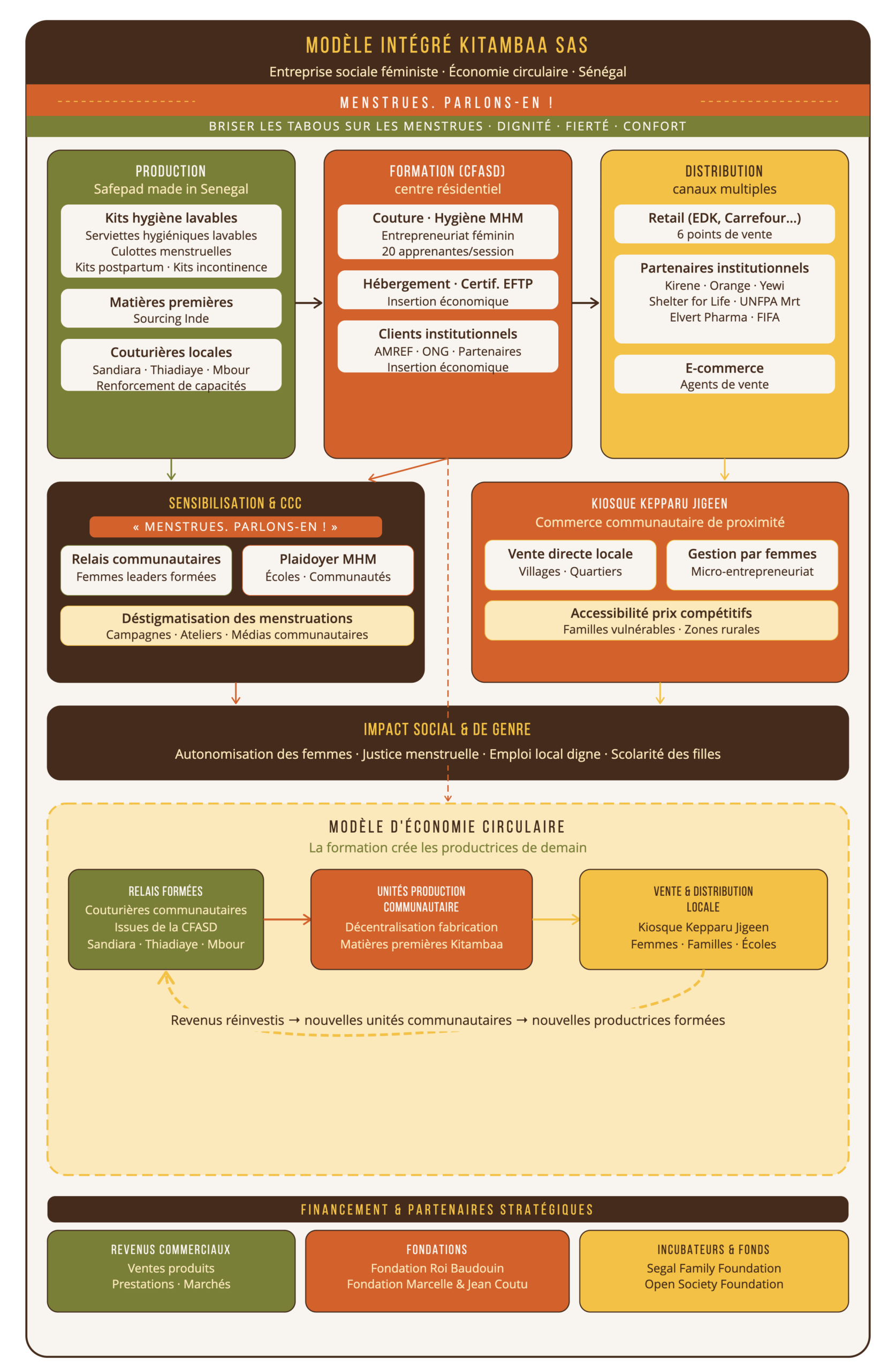
Built on raising awareness and building the capacities of women, girls, and stakeholders around menstrual health, hygiene, and social norms and practices, Kitambaa’s theory of change aims to reduce the misconceptions, social stigma, fear, shame, and taboos associated with menstruation, with the goal of creating an environment where women and girls can live their periods with dignity.
Training and employing women to produce washable sanitary pads will create decent job opportunities for women and include them in the value chain, which will diversify their product range and increase their income. Selling washable pads at an affordable price will allow more women and girls to access quality menstrual products.
In addition, establishing adequate, accessible WASH infrastructure in schools and markets will let them change as regularly and as often as needed, and will help improve their menstrual health and hygiene practices. This will reduce school absenteeism, dropout, early marriage and pregnancy, and will enable women to continue their commercial activities during their periods, improving their economic productivity and preventing loss of income.